Repetition Is Architecture, Not Bad Luck
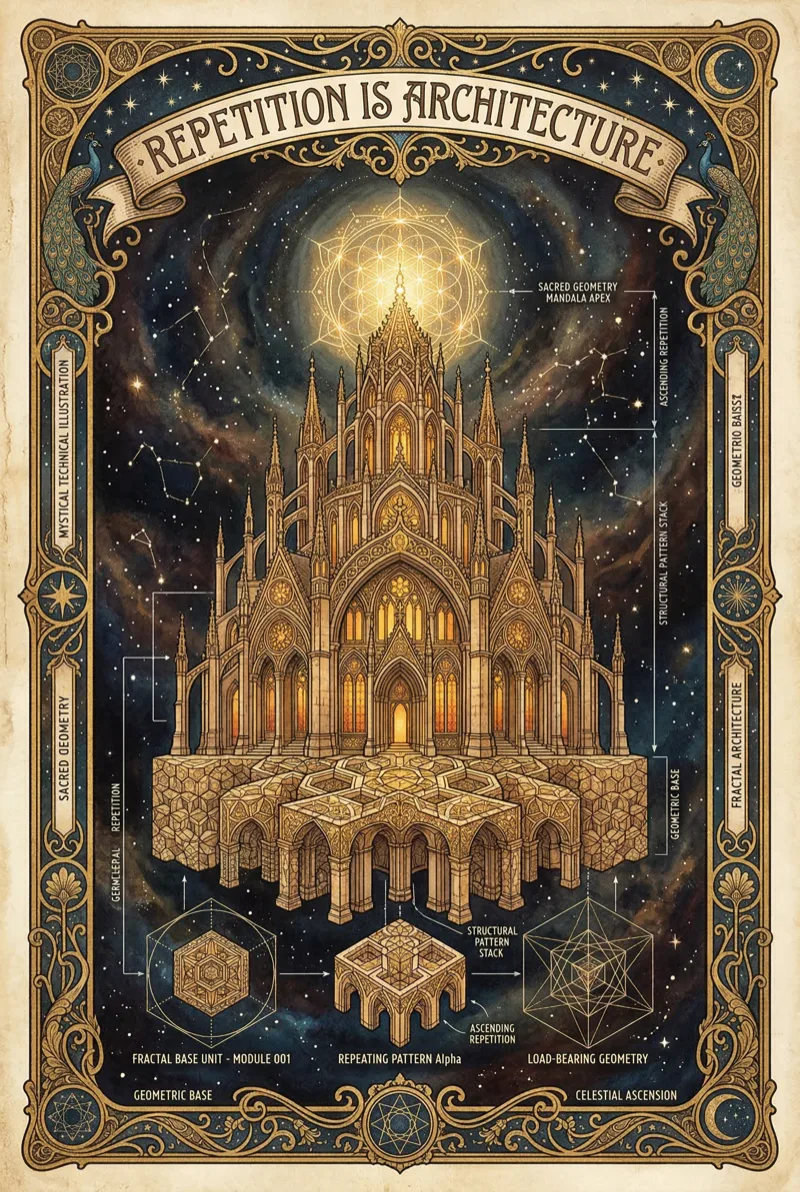
If it repeats across contexts, it is architecture — not coincidence.
Same conflict, different faces. Same avoidance, different packaging. Same loop, upgraded vocabulary.
That’s not bad luck. That’s La.
The Principle
La is inertia. Not laziness — structural persistence. The nervous system’s grooved response that runs identically whether you’re 14 or 44, in Mumbai or Munich, in your parents’ house or your own.
La doesn’t care about geography, salary, or personal growth. La cares about repetition.
If it repeats, La built it.
What Repetition Reveals
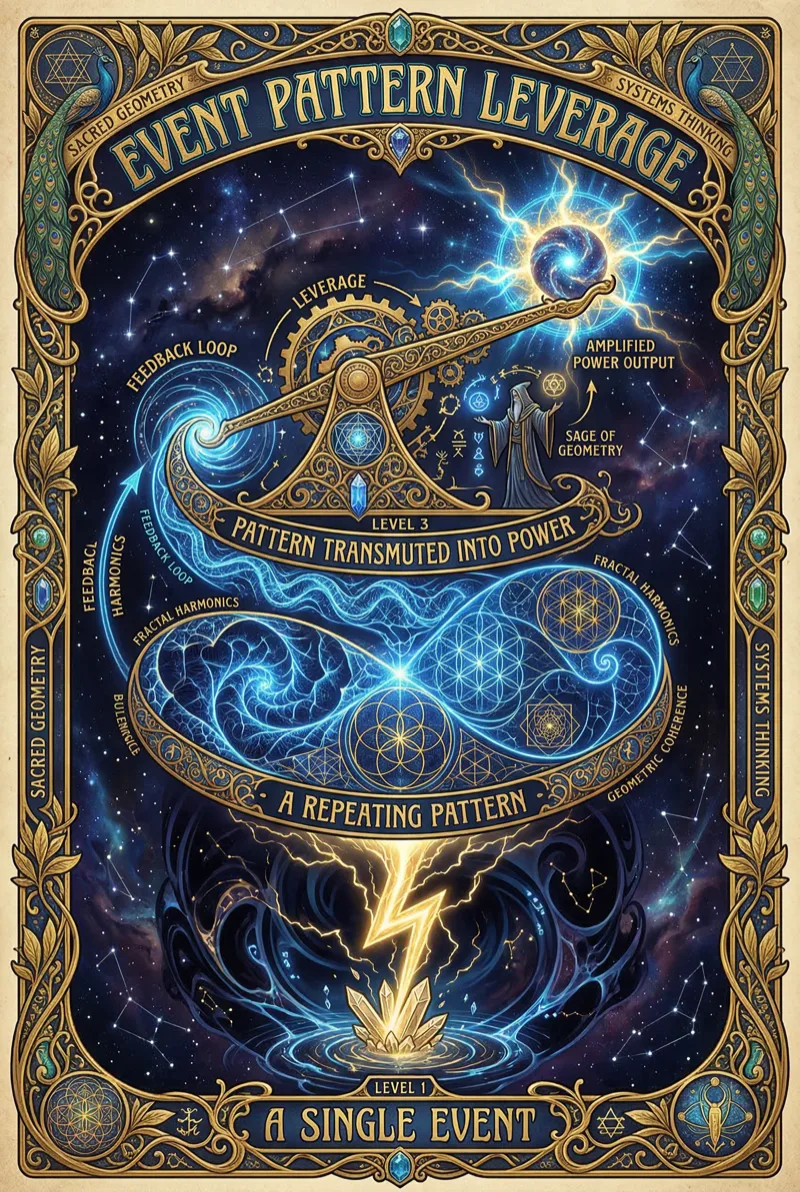
One occurrence is an event. Two is a coincidence. Three is architecture.
The relationship pattern that shows up with every partner. The work dynamic that reproduces with every team. The financial behavior that survives every income bracket.
You didn’t import these patterns consciously. They’re La — inherited inertial grooves running below the threshold of narrative.
The Category Error
Most people diagnose repetition as a choice problem: “I keep choosing the wrong partner.” “I keep making the same financial mistake.”
Choice implies Kha — the observer, selecting deliberately.
But La runs before Kha notices. The pattern fires, the defense completes, and the story catches up afterward with a plausible explanation. “I chose this because…” No. You ran this because the groove was already cut.
Architecture vs. Autobiography
The difference between autobiography and architecture:
Autobiography: “I have abandonment issues from childhood.” Architecture: “My nervous system runs a pre-emptive withdrawal sequence when attachment signals exceed a specific threshold.”
Same phenomenon. One is a story you identify with. The other is a circuit you can trace.
The Anatomist works with the circuit. Not the story about the circuit.
How to Read It
Pick one pattern that has repeated across three or more contexts.
Map it structurally:
- What’s the trigger category? (Not specific events — the class of input)
- What’s the somatic signal? (Where in the body, what quality)
- What’s the behavioral output? (What do you DO, not what do you feel)
- What story do you tell afterward? (The rationalisation layer)
If trigger, signal, and output remain constant while the story changes every time, you’ve found the architecture.
Kha-Ba-La Diagnostic
Kha sees the pattern repeating. Ba runs the pattern without permission. La is why it persists despite awareness.
The intervention isn’t more seeing (Kha). It’s more friction (La) applied deliberately — walking a new groove until the old one loses dominance.
Not insight. Inhabitation. Repeated, embodied, unsexy inhabitation.
Close
Your patterns are not your personality. They’re your architecture.
Architecture can be mapped, diagnosed, and — with enough deliberate inhabitation — re-grooved.
But first you have to stop calling it coincidence.