The Body Is the First Country
Daśāvatāra, the four yugas, and the limits that make a world.
I kept returning to a disquieting sentence: the perception of the body is the perception of the land. It arrived while I was thinking about how a body gets divided into organs, tissues, cells, borders, jurisdictions, and names. The divisions are useful. They let a physician locate an injury and let a geographer describe a watershed. But each division can also teach the mind what kind of world it inhabits.
Draw enough lines across a country and the map begins to feel more real than the ground. Do the same to a body and the body becomes an inventory. The inventory can then be used to explain the mind, and the divided mind begins to experience itself as a collection of departments. My interest is not in removing the divisions. It is in learning what they do.
These materials do not need to have anticipated contemporary biology in order to matter. The materials gathered here come from the Bhagavad Gītā, Vedic hymns, and Purāṇic texts; they do not speak from one text or in one voice. Kept in their distinct registers, they sharpen a disciplined set of questions: What is a field? What does a boundary protect? When does a useful distinction harden into a prison? And how does a living form change without becoming formless?

1. A field before it is a map
The Bhagavad Gītā names the body as kṣetra, the field, and distinguishes it from the knower of the field, kṣetrajña. The distinction is not a simple mind–matter split. Its force lies in the relation it creates: a field can be cultivated, damaged, observed, and interpreted; a knower can become confused about what is being observed. Read Gītā 13.2.
The body, in this register, is not a sealed object. It is a situated field. It has weather, thresholds, inhabitants, memory, and exchange. Centuries later, phenomenology gives relational life another set of coordinates: Eigenwelt, the world of one’s own lived interior; Umwelt, the surrounding world as encountered through a body; and Mitwelt, the shared world of other people, institutions, and meanings. The terms do different work: one names the body as a field to be known, while the other distinguishes the worlds that meet within knowing. See Phenomenology Online on Binswanger’s three worlds.
If the body is treated only as an object, then land becomes only property, and mind becomes only a private container. If the body is treated only as an idea, its hunger, injury, and material limits disappear. A field is neither a fantasy nor a pile of parts. It is a relation with conditions.
The Puruṣa Sūkta gives an image of cosmic order through a primordial person whose parts correspond to a larger social and cosmic arrangement. The Bhūmi Sūkta addresses Earth as ground, mother, and bearer of many peoples. These hymns are not blueprints for a modern state or a modern anatomy. In these hymns, body and ground become parallel instruments for thinking about order, plurality, obligation, and belonging. Read Ṛg Veda 10.90 and Atharva Veda 12.1.
The first country, then, is not a metaphor pasted onto the body from outside. It is a way of noticing that every map begins from an embodied coordinate. Before a person has a theory of land, the person already has a skin, a posture, a sense of inside and outside, and a practical answer to the question: what may enter here?
2. Four yugas as conditions of relation
The four yugas are often presented as a giant calendar: Satya, Tretā, Dvāpara, and Kali. Purāṇic texts also describe them as changing conditions of order, capacity, memory, and conduct. The Bhāgavata Purāṇa treats the cycles as recurring rather than as a one-time ladder of progress. These are cycles of cosmological time; forcing them into a dateable account of modern human history asks the text to become something it is not. See Bhāgavata 12.2.
Read as a diagnostic rather than a stopwatch, the yugas describe four conditions of relation.
Satya names a condition in which relation is comparatively transparent. The field is not without limits; limits are legible. Preservation, nourishment, and order are experienced as mutually supporting. In the body, this is the sense that a boundary can be firm without becoming hostile.
Tretā introduces measure, vow, and institution. The world becomes more structured. Structure allows transmission, but it also creates the possibility of hierarchy becoming more important than the life it was meant to serve. The body learns posture, role, discipline, and the cost of maintaining form.
Dvāpara is the condition of competing obligations. The field is still intelligible, but no single rule resolves every conflict. The Mahābhārata and the Kṛṣṇa material are powerful here because action must be contextual. A boundary may be lawful and still produce harm in a particular situation. The task is discernment, not rule worship.
Kali names a condition of contraction, noise, and weakened relation. The problem is not that the world becomes unreal. The problem is that signs detach from what they were meant to serve. Names, institutions, identities, and borders continue operating after their living purpose has been forgotten.
Read this way, the yugas are not a ranking of people. They are four ways a field can organize or lose coherence. The same person can inhabit all four in one day. A body can be transparent in one relationship, over-structured in another, conflicted in a third, and fragmented by accumulated signals in a fourth.

3. Daśāvatāra: forms that answer conditions
The familiar ten-avatar sequence is not the only avatar list in Purāṇic literature. The Bhāgavata Purāṇa gives a longer sequence and then says that incarnations are innumerable. Jayadeva’s Gīta Govinda presents a tenfold poetic arrangement. The list is therefore a pedagogical constellation, not a single universally fixed table. Read Bhāgavata 1.3 and Jayadeva’s Daśāvatāra stotram.
The sequence becomes more useful when read as a series of forms answering conditions. An avatāra does not escape form. The Infinite, within the story’s logic, assumes the form required by a damaged field.
- Matsya preserves what would otherwise be lost: continuity under flood.
- Kūrma supports a collective undertaking: patience made load-bearing.
- Varāha retrieves ground from submersion: a world re-grounded.
- Narasiṃha breaks a binary that has become legally airtight: a category exceeded without abolishing order.
- Vāmana changes scale, measuring possession against the space life actually occupies.
- Paraśurāma interrupts force that has mistaken inheritance for entitlement, correcting corrupted authority.
- Rāma gives form to maryādā, the discipline of a boundary and a vow: a limit inhabited without becoming the whole.
- Kṛṣṇa acts within collision, bringing contextual intelligence to conflicting duties.
- Buddha, in later lists, turns toward compassion, non-harm, and release from compulsive grasping: unnecessary suffering reduced.
- Kalki belongs to a future horizon in the cycle: renewal after a form has exhausted its capacity to hold relation.
Forms answering conditions is a modern reading, not Purāṇic vocabulary. A fish, tortoise, boar, man-lion, dwarf, warrior, king, charioteer, teacher, and future rider are not interchangeable costumes. Each is a boundary selected for a particular problem.
The implication is severe and useful. Freedom is not the absence of form. Freedom is the ability to recognize which form a situation requires, and when that form has become an obstacle to the field it once protected.
4. When land becomes a partition
My central proposition is that the division of land can produce a divided understanding of mind. This does not mean borders mechanically cause psychology. Repeated partitions can train attention. A line on a map can become a line in memory, law, language, and bodily expectation. Once the line is treated as natural and permanent, the mind begins organizing experience around it.
The same pattern appears when the body is broken down into cells. “Cell” is a precise biological term, a social unit, a room of confinement, and a carrier of electrical charge in a device. A shared word does not make these structures the same. Their relation becomes illuminating only while their boundaries remain visible.
Biologically, a cell is not a tiny prison with an absolute wall. Its membrane is selectively permeable. It maintains difference while permitting exchange. OpenStax’s account of membrane transport describes this in ordinary scientific terms: substances cross by diffusion or with the aid of channels, carriers, and pumps. The boundary is real because it is selective, not because it is sealed.
The membrane clarifies what is shared and what is not. A biological cell is an observable structure with measurable processes. A social cell is a unit that organizes people and information. A prison cell is a boundary imposed to restrict movement. A contemplative cell can be a chosen enclosure for attention. Their shared feature is boundedness. Their ethical difference lies in who sets the boundary, what may cross it, and whether the boundary can be revised.
This is where Eigenwelt, Umwelt, and Mitwelt become useful. The inner world is not independent of the surrounding world. The surrounding world is not neutral to the body that encounters it. The shared world enters through language, law, architecture, work, family, and memory. A partition imposed on land can therefore become an Umwelt condition, an Eigenwelt expectation, and a Mitwelt rule at the same time.
The body is permeated by all three worlds. That does not make the body infinitely malleable. It makes the body a site where different scales meet.
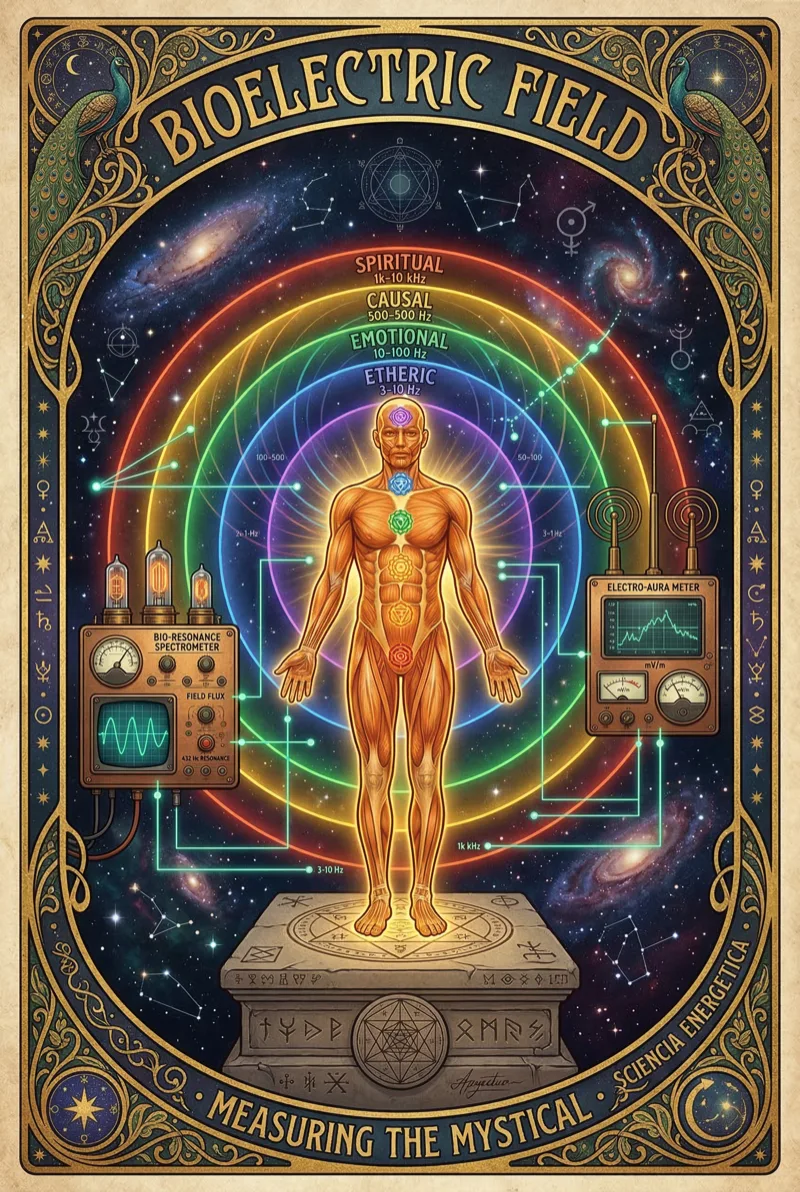
5. Limits are foundations until they become verdicts
The goal is not to remove limitations. It is to understand that limitations can become foundations for growth, learning, and form. Some limits are constitutive: skin, gravity, sleep, mortality. Some are inherited: language, family expectation, historical memory. Some are chosen: a vow, a craft discipline, a period of silence. Some are imposed: caste, coercion, incarceration, exclusion. Some are emergent: fatigue, trauma, debt, illness, ecological damage. Some are revisable: a role, a boundary, an institution, a story about what a body can do.
These limits often overlap. Their consequences do not. Calling every limit “chosen” erases coercion. Calling every limit “fixed” erases agency. Calling every limit “a lesson” can turn suffering into moral punishment. Within conditions no person wholly selected, zones of interpretation, solidarity, agency, and redesign can still appear. Even when a person later names growth, that growth never proves the suffering was deserved or secretly selected.
Kha–Ba–La gives this discernment three terms. Kha is the witnessing and authoring capacity: it notices the frame. Ba is the embodied carrier: it feels the frame as breath, posture, hunger, tissue, and action. La is inertia, friction, and material resistance: the part that does not yield because a concept has changed.
The triad prevents a common spiritual escape. Kha without Ba becomes abstraction. Ba without Kha becomes mere mechanism. Both without La become fantasy, because nothing pushes back. A limit becomes workable when all three are present: the witness can name it, the body can register it, and the material world can answer.
One question can be carried on its own: Does this boundary preserve relation, or has it replaced relation? A membrane preserves relation through selective exchange. A partition replaces relation when it turns a living difference into a final verdict about who may enter, speak, belong, or change.
Closing: rewrite the map without erasing the ground
The Daśāvatāra does not offer a fantasy of a body without limits. It offers a grammar for forms that answer conditions. Read as conditions of relation, the yugas show what changes when memory thins, measure hardens, obligations collide, and attention loses contact with what its signs were built to serve.
The body is the first country because every later country is encountered through it. Land is an extended body because boundaries, resources, movement, and belonging are lived before they are theorized. Mind becomes divided when distinctions lose their status as tools and begin posing as the ground itself.
The work is therefore neither dissolution nor obedience. It is cartography with accountability. Name the field. Name the boundary. Ask what crosses it. Ask who benefits from its permanence. Then notice what the body already knows before the map explains it away.
Distinction is a tool; severance is the error.
Self-Consciousness as Technology. Body as Medium. Breath as Interface.
@witnessalchemst · tryambakam.space