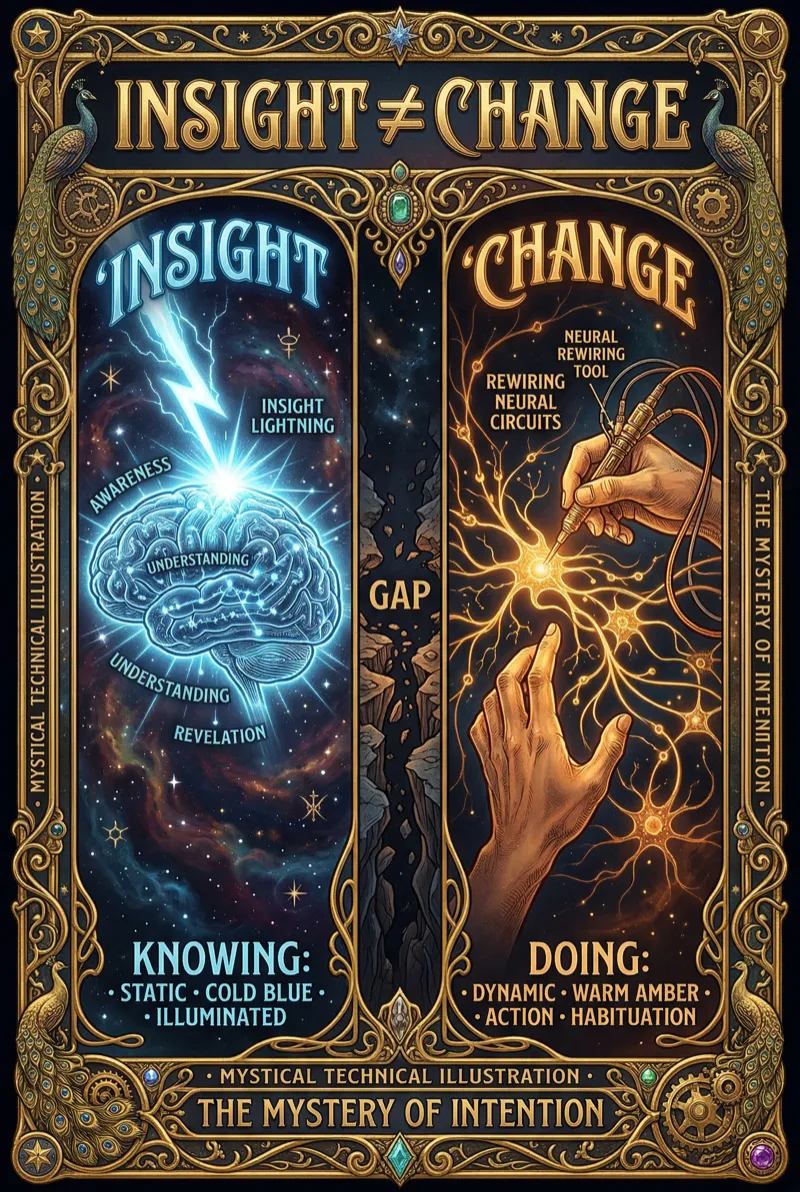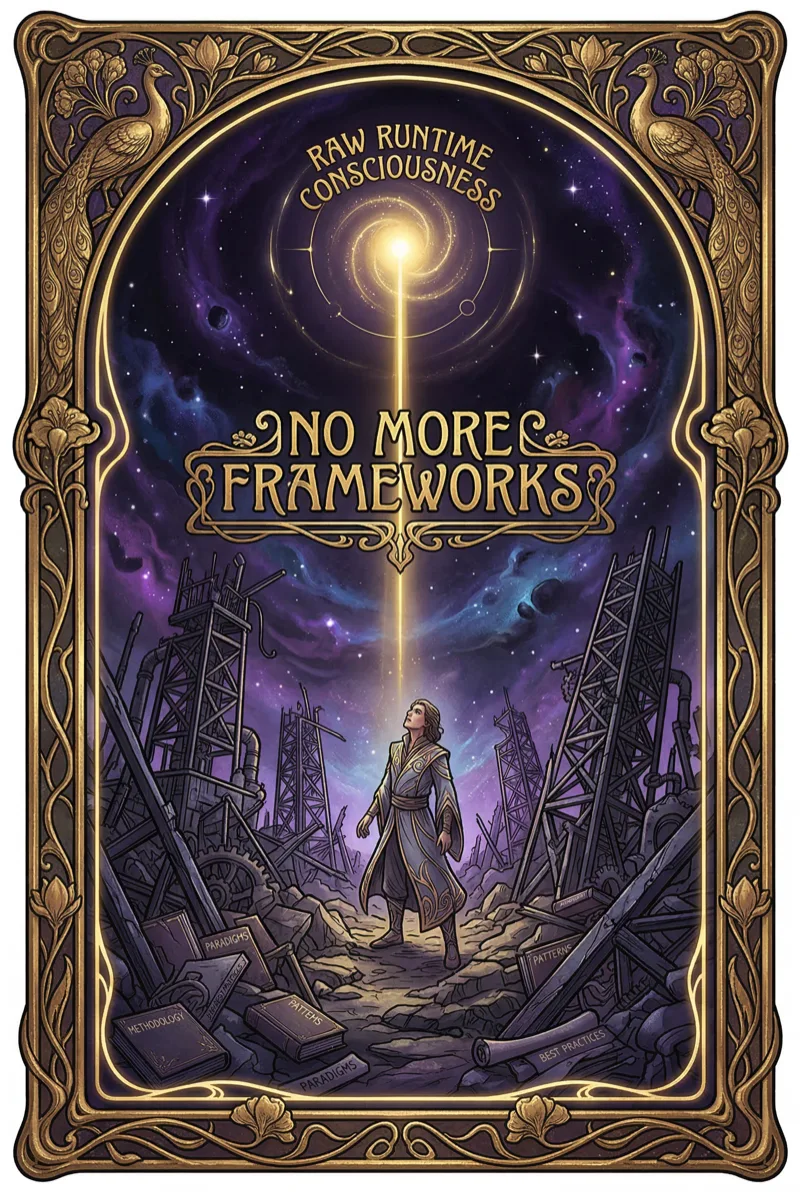
You Don’t Need More Frameworks. You Need Runtime Access.
You don’t need another framework. You need read access to the operating system already executing you.
The Blind Spot
Every self-improvement stack has the same architecture flaw:
It adds applications to a machine whose kernel it never inspects.
New habits. New vocabulary. Same defensive subroutines running underneath.
The 4-Layer Map
Four layers of self-architecture:
- Surface habits = UI (La on autopilot)
- Beliefs = application logic (La crystallized into narrative)
- Pattern loops = runtime (Kha’s intervention point)
- Identity defense = kernel permissions (La blocking its own examination)
No kernel access, no rewrite.
Signal Before Story
The sequence that matters: Signal, then State, then Story.
Ba registers the signal before cognition touches it. La shapes it into a familiar state. Kha narrates the story you call “my reaction.”
Authorship begins at signal, not story. Most intervention happens at story. Too late.
Pattern as Architecture
If a pattern repeats across relationships, projects, and emotional states—it’s not coincidence.
It’s architecture.
What’s architecture can be mapped. What’s mapped can be interrupted. What’s interrupted becomes material, not fate.
That’s field cartography.
The Debug Surface
The Enneagram is a debug surface, not a personality badge.
Not “who am I?” but: What defense fires first under load? What does it protect? What does it cost at runtime?
Your type = the stress response your nervous system defaults to when Kha stops watching.
The Protocol
Micro-interruption protocol:
- Name the loop in one sentence
- Identify the pre-loop signal (Ba: body tempo, breath shift)
- Install one interruption small enough to run daily
- Track for 7 days
- Ask: did the loop weaken, relocate, or disguise itself?
Structure over heroics.
The Question
The system succeeds when you no longer need it.
What loop runs most automatically in your life right now—and what’s the earliest signal before it fires?