The Downstream Mind
How AI Killed the Thrill of Finding Things — and Created the Most Powerful Marketing Exploit in History
A research article on curation collapse, the 50/50 dopamine coin toss, and the emerging Easter Egg Economy
“You are not the author. You are downstream, waiting for updates to trickle from sources you can’t see, can’t name, can’t access.”
I. You’re Being Fed
Something changed in how we find things.
It happened slowly, then everywhere at once. The search bar was replaced by the feed. The feed became the algorithm. The algorithm became the AI assistant. At each step, the distance between you and the raw, unmediated experience of discovering something collapsed further — until the act of discovery itself was engineered out of the experience.
You don’t browse anymore. You receive.
Your morning opens with a summary of what’s relevant. Your afternoon is punctuated by recommendations calibrated to your demonstrated preferences. Your evening is a curated stream of content that knows — with increasing accuracy — what will hold your attention. And it’s all genuinely useful. Genuinely relevant. Personally tuned.
And somehow, flat.
This flatness is not a design failure. It is a design outcome. And understanding why it’s happening — at the level of the nervous system, not just the interface — reveals something significant about where attention will actually live in the next decade.
The most powerful marketing primitive of the AI era won’t be personalization. It will be its inverse.
It will be the engineered experience of finding something yourself. Somewhere beneath the polished surface, something ancient waits with its mouth open — the crocodile you never saw because you stopped looking down.
II. Orchestration of the Feed
The architecture that delivers your attention is not neutral — it is directional.
For most of human history, finding information required friction. You had to go somewhere, ask someone, follow a thread, get lost, backtrack, stumble. The act of arriving at something — a fact, an idea, a product, a person — was embedded in a process of active search that involved genuine uncertainty at every step.
You didn’t know if what you were looking for existed. You didn’t know if you were looking in the right place. You didn’t know if the next click, the next shelf, the next conversation would yield anything at all.
That uncertainty was the point. Not as a flaw in the information delivery system — as the mechanism that made information feel like it mattered.
Jean Gebser, writing in The Ever-Present Origin — a work that operates simultaneously as phenomenological narrative, metaphysical treatise, and cosmological framework — identified five structures of consciousness that have emerged across human history: archaic, magic, mythic, mental-rational, and integral. Each structure doesn’t replace its predecessor — it enfolds it. But each structure also has an efficient and a deficient mode. The deficient mental-rational is the structure that has forgotten it is a structure. It operates purely through abstraction, prediction, categorization — and it mistakes its own operations for the whole of consciousness. Consciousness does not progress linearly, Gebser insists. It mutates. It irrupts. But the deficient mental-rational cannot see its own deficiency — it has mistaken the map for the territory so completely that the territory has ceased to exist.
AI-assisted curation is the deficient mental-rational perfected. It is all relevance scoring, all prediction, all pattern-matching — consciousness reduced to information processing with the substrate removed. The information processing pipeline runs in one direction: algorithm design feeding consciousness reduction feeding more algorithm design — a closed loop that mistakes its own increasing efficiency for increasing intelligence. The system’s job is to eliminate uncertainty from information delivery. More signals, better models, higher relevance scores. Less friction between you and the content you would have found eventually anyway.
When you treat mental states as system states — when attention becomes resource allocation, when curiosity becomes a query to be resolved — you get an architecture that is extraordinarily efficient and existentially hollow. Social programming becomes pattern recognition becomes — in the efficient version — consciousness liberation. But that last step never arrives in the deficient mode. The pipeline terminates at pattern recognition, loops back, and calls the loop complete. The downstream mind is not a metaphor. It is a consciousness architecture where the allocation of attention has been outsourced to an algorithm that has no theory of what engagement is for.
Every channel has its trickster — the ape behind the curtain who arranges what you see before you see it, who shuffles the mercury of your attention into predetermined corridors. The orchestration is invisible precisely because it is total.
And it succeeds. The uncertainty is removed. The relevance improves.
The dopamine circuit collapses.
III. Uncertainty Is the Mechanism
In the 1990s, Wolfram Schultz discovered that dopamine doesn’t fire at the moment of reward.
He was tracking dopamine neurons in the brains of macaques — specifically neurons in the ventral tegmental area that project to the nucleus accumbens, the brain’s primary reward processing center. The experiment was simple: present a cue, deliver a reward, measure dopamine firing patterns.
What he found was counterintuitive. Dopamine didn’t fire most intensely at the moment of reward. It fired at the moment of prediction — when the animal was anticipating a reward it wasn’t yet sure of receiving.
More precisely: dopamine firing correlates with prediction error. The system activates maximally when the outcome is uncertain and the potential reward is real. When outcomes become fully predictable — when the reward is guaranteed — dopamine response drops. The circuit cares about the gap between expectation and reality. Eliminate the gap and you eliminate the signal.
The research behind the veil of popular neuroscience — extended by Read Montague and dozens of others, the scroll of data long but the conclusion singular — consistently demonstrated that the dopamine system is calibrated not to reward, but to the possibility of reward under uncertainty.
Think of dopamine not merely as a chemical but as a consciousness aperture — the mechanism by which the mind dilates or constricts its field of receptivity. When the aperture is wide, the field admits novelty, ambiguity, the genuinely unexpected. When the aperture narrows, the field admits only what confirms, only what matches, only what the prediction engine already knows how to score. What algorithmic curation does, at the neurochemical level, is narrow the aperture. The feed doesn’t overstimulate — it constrains. It replaces the wide-field uncertainty that would naturally dilate the aperture with a narrow-band certainty that holds it pinched.
The coin toss is the neurological sweet spot.
A guaranteed outcome is boring. A hopeless outcome is demoralizing. A 50/50 uncertainty — you might find something, you might not — is precisely the condition under which the dopamine circuit generates its maximum motivational signal.
There is a framework that maps the nine Greek Muses to nine endocrine functions — an ancient taxonomy of creative states rendered in biochemical terms. In that framework, Thalia, the Muse of Comedy, corresponds to dopamine. Not comedy as jokes — comedy as the capacity for unexpected resolution, the delight of incongruity suddenly cohering into meaning. The comedic faculty, neurologically, is the reward circuit’s response to surprise that resolves.
And Melpomene, the Muse of Tragedy, corresponds to cortisol — the chemistry of awareness intensified beyond the point of resolution, catharsis without release.
The downstream mind has been de-Mused. Its comedic faculty — Thalia’s domain, the architecture of finding-as-delight — has been algorithmically suppressed. When the feed removes surprise, Thalia goes silent. What remains is Melpomene: cortisol, the tragedy of perpetual stimulation without meaning. Scroll, react, scroll — a cathartic form emptied of catharsis.
This is why slot machines are more compelling than vending machines. Why hunting feels different from harvesting. Why the used bookshop with no organization is somehow more absorbing than the perfectly categorized digital library. Why stumbling on something produces a fundamentally different quality of engagement than being handed the same information with a relevance score attached.
The thrill of finding is neurologically distinct from the satisfaction of having.
IV. Flat Terrain
Apply this to the current trajectory of AI and a specific problem becomes visible.
Every improvement to algorithmic curation is, from the nervous system’s perspective, a reduction in the conditions that make discovery feel valuable. The better the recommendation engine, the more precisely it predicts what you want, the more it eliminates the uncertainty that made encountering that content feel like finding rather than receiving.
The user experience improves. The dopamine hit flattens.
This is not a critique of AI. It is a description of an emerging asymmetry: the systems built to maximize relevance are structurally at odds with the systems that generate intrinsic motivation through exploration.
Michael Tsarion, in Symbolic Literacy, identifies the deeper layer of this problem: “Due to chronic symbol illiteracy, we live our lives largely unaware of a great poison in our midst… This is the use of subliminal persuasion in media and advertising.” The feed is not merely a content delivery system — it is a symbolic architecture. Every thumbnail, every headline, every engagement metric operates at the subliminal level, structuring perception below the threshold of conscious recognition. Tsarion calls it a “psychic dictatorship.” The algorithmic version is more precise than anything he diagnosed, because it has telemetry.
The result is a population that receives more precisely targeted information than any generation in history — and experiences it as curiously, persistently inert.
Content consumption has never been higher. Content feeling significance has never been lower.
This is the downstream condition. You are not the author of what arrives in your attention. You are the receiver. And the receiver’s nervous system knows the difference, even when the rational mind doesn’t notice.
The feed is not just a UI — it is a consciousness programming interface, complete with its own attention allocation algorithms, memory buffer management, and context switching triggers. It operates what might be called an Overton Window of thought: boundaries of what content is surfaced, permission elevation patterns determining what breaks through, belief system constraints that reinforce existing frames, reality filter parameters that determine what counts as real. Underneath, a trust architecture runs silently — authority validation structures, consensus building mechanics, pattern reinforcement loops — all invisible, all structural, all shaping the topology of what you are capable of thinking while you scroll.
There is a word for the architecture this creates: it is the Vine of Determinism — a term that appears in certain consciousness fiction to describe exactly this architecture — the invisible structure of pattern-reinforcing pattern, where every recommendation teaches the algorithm to serve you more of what you’ve already encountered, deepening the channel, narrowing the territory, compressing the possible into an ever-more-precise replica of your demonstrated preferences.
You see the world through a frame that tightens. The window narrows. The rams of your habitual attention butt against the same walls, season after season, mistaking repetition for territory. You’re not being discovered. You’re being mirrored back at yourself, with better and better resolution.
V. On the Threshold
Card zero in any serious symbolic system is unnumbered — it carries no name and no address.
Not foolishness — potential. The stem cell that hasn’t differentiated yet. Pure possibility with no predetermined form. The one who stands at the edge of something they can’t name, carrying no baggage precisely because the thing they’re about to encounter doesn’t exist in their taxonomy yet.
The defining characteristic of this figure is that they cannot be targeted. Their arrival cannot be predicted. They didn’t come because an algorithm delivered them. They came because something in the structure of their inquiry — a question they were already carrying — intersected with a signal they weren’t expecting to find.
Gebser would call this an irruption — consciousness does not progress linearly; it mutates, it breaks through. The Fool’s Gate is not an evolution from one mode to the next. It is an irruption of the integral structure: magic (the felt sense of finding), mythic (the recognition of pattern), mental-rational (the analysis of structure), and integral (the awareness that holds all three simultaneously without collapsing them). Multiple consciousness structures co-arising in a single moment of encounter. This is what Gebser means by the integral — not a synthesis that flattens the previous structures, but a transparency that allows them all to operate at once. This is why the moment feels so disproportionately significant — it is not merely cognitive. It is structural. It is multiple modes of consciousness firing simultaneously in a person who, seconds before, was operating in only one.
This is the highest-value moment in any marketing or meaning-making architecture.
Not the conversion. The first encounter. The moment a question surfaces — not as content consumed but as recognition experienced. The moment the thing you didn’t know you were looking for reveals itself in the last place a recommendation engine would have thought to put it.
Four forces pull in opposing directions — comfort, habit, novelty, fear — and still the figure moves forward, carrying something precious in the space between their hands that they cannot yet name. The grail is not given. It is carried across the threshold by the one who did not know they were worthy of carrying it.
The dopamine hits hardest here. The 50/50 uncertainty resolves. Not because the algorithm said “you might like this” — but because you found it.
The difference is not semantic. It is neurochemical. And it is strategically everything.
The Fool’s Gate is the moment before the pitch. It is the threshold where a person, moving through unstructured territory, encounters a signal that arrests their attention — not because they were targeted, but because the signal was true enough to be recognizable on contact.
How do you engineer that? You don’t engineer the encounter. You engineer the signal.
VI. Upstream Signals
The emerging answer to curation collapse is already present in culture, unrecognized.
It is the easter egg.
Not in the gaming or film sense — though those are relevant precedents. In the broader sense: a deliberately placed signal, embedded in unexpected territory, that rewards the person who encounters it with a specific kind of recognition. Not a reward for compliance or completion. A reward for noticing.
The easter egg works because it preserves exactly what algorithmic curation destroys: the discovery circuit. The person who finds an easter egg did not receive it. They stumbled into it. The uncertainty was real. The signal resolved it. The dopamine fires at the exact intensity the recommendation engine systematically prevents.
But easter eggs, as they function in the emerging attention economy, are not accidents. They are architecture.
Tsarion, in The Inner Zodiac, makes a claim that reframes this entire territory: “The zodiac is not merely an external phenomenon. On the contrary, it is a psychic apparatus. It is an enfolded attribute of the psyche; an ancestral image embedded within the so-called race memory.” Symbols are not labels for external objects — they are states of consciousness. The easter egg, properly constructed, doesn’t reference meaning. It activates a state. The symbolically literate reader doesn’t decode it — they recognize it, the way you recognize a landscape you’ve seen in dreams.
Consider the precise mechanics. A signal is planted — not in an ad unit, not in a recommendation slot, not in a sponsored feed position. It is placed in the wild territory where genuine inquiry already lives: a Reddit thread at 2am where someone is articulating a problem they can’t name. A corner of a forum where a small number of people are asking the real questions, not the polished ones. A structural detail embedded in a piece of writing that, when noticed, reveals the entire framework governing the territory the writing inhabits.
Three figures ride the edge of this economy — one ascending toward the signal, one descending into consumption, one sitting still at the apex, seeing both. The sphinx at the top does not move. Everything else rotates around it. The ascending figure is the finder. The descending figure is the one who received but never found. The still point is the architecture itself.
The algorithmic feed operates a symbolic architecture that the symbolically illiterate cannot read. This is Tsarion’s core insight applied forward: the subliminal persuasion of the recommendation engine works precisely because the audience lacks the symbolic grammar to see it as a structure. The easter egg inverts this — it rewards symbolic literacy instead of exploiting symbolic ignorance.
These signals are not designed to reach everyone. They are designed to be findable — which is a different design constraint entirely. Findable by the person already in motion. Already asking. Already at the edge of the coin toss.
The easter egg is not a message broadcast downstream. It is a signal upstream, placed where the person who needs to find it is already looking.
VII. No Name, No Address
Consider a system built on a specific premise: that self-consciousness is a technology, not a state.
Not a philosophy. Not a wellness modality. A technology — meaning it has components, architecture, version history, and observable outputs. The system runs sixteen perceptual engines across frameworks that include Vedic astronomical computation, typological analysis, a 78-card symbolic matrix, biorhythmic modelling, and sacred geometry. These are not belief systems within the architecture. They are lenses — different angles of approach to the same territory: awareness as it actually operates, beneath the story awareness tells about itself.
The marketing architecture for this system encodes the theory you’ve been reading.
The flagship narrative property is a manga — a story about a plumber who descends into the infrastructure of the psyche with wrench in hand, finding what has been leaking beneath the polished surface. The manga is publicly available. It reads as a compelling story. Most people experience it as exactly that.
Underneath: it is a decoder ring.
Each chapter carries symbolic correspondences mapped to specific positions in the 78-card matrix. Chapter headings use visual motifs calibrated to each scene’s emotional register. Character arcs mirror archetypal progressions that practitioners of the system would recognize immediately. Across the episodes, there are distributed references that, when collected, reveal the complete symbolic architecture governing the entire ecosystem — every product, every workflow, every practitioner threshold encoded in the same matrix.
This is not announced. Not marketed. Not explained anywhere in the documentation.
The figure hangs inverted, suspended between worlds, seeing everything from the angle no one thought to look. What appeared as a story is a map. What appeared as entertainment is an initiation sequence. The dying god is the old mode of attention, released voluntarily so that a new orientation can emerge.
It is there for those who know to look — and it reveals the entire architecture to those who find it. Not as a breadcrumb toward purchase. As genuine structural recognition: the discovery that the thing you found is organized at a level you hadn’t seen yet, which means the surface you’re looking at is the edge of something much larger.
That is the Fool’s Gate, deliberately constructed.
The acquisition strategy follows the same logic. You don’t find this system through an ad. You find it through a question — specifically, through curated resonance points placed in the territory where genuine inquiry already lives. Not polished content for mass consumption. Precisely articulated framings of problems that most people experience but rarely name. Placed where people are already at 3am, already in the coin-toss moment, already carrying the thing that the signal is designed to resonate with.
This is a marketing strategy and a philosophy of authorship at the same time. The two are not in tension. They are the same architecture applied at different scales.
VIII. Directional Ethics
There is a version of this architecture that is manipulation.
The dopamine circuit doesn’t distinguish between a genuine discovery that opens territory and an engineered illusion of discovery that harvests attention. Both fire the same mechanism. The nucleus accumbens doesn’t file a complaint about the difference between a meaningful find and a cleverly disguised pitch.
This is the ethics layer that cannot be ignored.
The relevant distinction is not between “organic” and “engineered” — all signals are engineered at some level, including the questions that arise in genuine inquiry. The distinction is directional. Does the discovery leave the person more upstream or more downstream? Does the easter egg produce recognition that increases the finder’s capacity to author their own meaning — or does it produce a dependency on finding more easter eggs from the same source?
There is a principle from endocrine research that illuminates this precisely: the endocrine system provides architecture without determinism. The Spolski correspondence framework articulates it as “system observation without determinism” and “free will within chemical architecture.” The dopamine circuit doesn’t determine — it provides the landscape. Cortisol doesn’t dictate — it intensifies the field. Oxytocin doesn’t bond — it opens the possibility of bonding. The entire chemical architecture operates as a landscape of affordances, not a set of rails. The question is not whether the chemistry is operating — it always is — but whether the landscape is traversed freely or channeled without the traveler’s knowledge. The downstream architecture turns affordances into rails. The upstream architecture preserves the landscape and trusts the traveler.
The chains are real, but they are worn by choice. That is the precise horror of the alternative architecture. The figure who mistakes bondage for belonging, who experiences the constriction of their perceptual field as comfort, who wears their algorithmic determination like jewelry — this figure is not imprisoned. They are refusing to look at their own hands.
The first direction is a gift. It expands the territory the person can inhabit. The second is extraction. It creates a new Vine of Determinism wearing the clothes of serendipity.
The test is simple: does the thing you found require you to keep finding more, or does it give you something you can carry into territory the source has no access to?
Pattern recognition without limitation. That is the upstream ethic rendered in biological terms. The capacity to see the pattern without being captured by it — to observe the system without being determined by it. A system that produces genuine practitioners — people who develop their own coherence, their own pattern recognition, their own capacity to read the architecture of experience — is different from a system that produces loyal consumers who experience the brand’s content as discovery while remaining entirely downstream.
The Easter Egg Economy will bifurcate along exactly this line. The first category will be recognized, over time, as one of the more honest forms of marketing that has ever existed. The second will be recognized as one of the more sophisticated forms of manipulation.
The difference is whether the engineer of the signal is willing to build it to produce people who eventually transcend the need for the signal.
That is the only honest architecture for a practice of genuine authorship — and it turns out, the only marketing strategy that survives long-term in an environment where AI is teaching everyone to recognize when they’re being fed.
IX. Integrated Framework
Three phases structure the design of discovery in the AI era.
Phase One — Signal Architecture (50/50 Design)
The signal must preserve genuine uncertainty. If it reads as an ad — even a sophisticated one — the dopamine circuit doesn’t fire at discovery intensity. The signal has to be true enough that the person encountering it could legitimately not be sure whether it was placed there for them or whether they just found something real. That ambiguity is not a flaw in the design. It is the mechanism.
Design constraint: the signal should feel like it was written by someone who didn’t know you specifically were going to find it, but somehow knew exactly what you were carrying when you did.
Phase Two — Recognition Depth (The Decoder Ring)
The best easter eggs have layers. The first layer is accessible to anyone with curiosity. The second rewards sustained attention. The third reveals itself only to those who bring specific knowledge — the kind of knowledge the right person would already have.
Each layer deepens the find. The person who gets to layer three doesn’t just feel like they discovered something. They feel like they discovered something that was always there, in a structure that has been coherent all along, waiting for someone with their particular perceptual equipment.
Two towers stand at the edges of perception. Between them, a narrow way winds through territory that looks different depending on whether you traverse it by moonlight or daylight. The scarab beneath the surface carries the sun through the underworld — most travelers see only the towers. The passage between reveals itself to those who walk it.
This is the difference between a curated resonance point and a piece of content. One rewards the quality of attention the finder brings. The other delivers the same value regardless of who’s receiving it.
Phase Three — Upstream Yield (The Authorship Test)
The final test: what does the discovery produce in the finder? More dependency, or more capacity? Does the person who found the thing feel more downstream — more attached to the source, more reliant on the next signal — or more upstream — more capable of generating their own coherence, applying their own pattern recognition, writing their own code?
The marketing that survives the AI era will be the marketing that passes this test. Not because it’s more ethical in the abstract, but because the population being marketed to is increasingly capable of detecting the difference — and the ones who detect it will be the ones worth reaching.
X. The Quine
There is a concept in computer science called a quine: a program whose output is its own source code.
It produces itself. It contains the instructions for its own regeneration.
The most sophisticated form of the easter egg economy operates on this principle.
The signal, placed in the wild, finds the person carrying the right question. The person follows the signal to the thing the signal was pointing at. The thing produces in the person a capacity they didn’t have before the encounter — a new perceptual lens, a new framework, a new way of reading the architecture of their experience.
And then: that person, now carrying this new capacity, becomes a signal in their own environment. Not as a brand ambassador, not as a recruited referral, but as someone who has been genuinely changed by the encounter — and whose presence in their own social territory carries the trace of that change in ways that cannot be manufactured.
There is a model of social consciousness that maps this propagation in three layers. The first layer is self-validation — the internal mechanisms by which a person confirms their own coherence. The second is the immediate social field — the close network, the trust circle, the people whose feedback carries genuine weight. The third is the extended social network — the wider territory where signals propagate or die.
The Quine principle operates at the second layer. The person who discovers the easter egg doesn’t broadcast to layer three. They resonate at layer two. Their close network registers something — not a recommendation, not an endorsement, but a shift in the quality of the person’s attention, the precision of their questions, the frameworks they now carry without announcing them. The trust circle notices before the person announces. The immediate social field — the people who know you well enough to register when something in you has changed — becomes the propagation medium. This is signal at its most irreducible. It cannot be faked, because it is not a message. It is a state.
They become the easter egg.
This is the Ouroboros of the new attention economy — the serpent completing the circle, the dancer at the center of the four corners who moves because the architecture is whole. The signal finds the person. The person finds the system. The system produces the practitioner. The practitioner carries the signal into territory the original system has no access to — and places it there, not as marketing, but as the natural overflow of having genuinely found something.
This is what makes the Easter Egg Economy categorically different from its predecessors. It doesn’t scale by reaching more people. It scales by producing people who have been changed enough to resonate differently in their world.
The system that succeeds in this era will not be the one that delivers the most downstream content. It will be the one that produces the most upstream human beings.
Not by telling people they need to be more upstream. By engineering the discovery that makes being downstream feel like the actual problem.
The code is yours to write. But first — you have to find it yourself.
This article draws on the neuroscience of prediction error and dopamine signaling (Schultz et al., 1997; Montague & Berns, 2002), Jean Gebser’s consciousness structures (The Ever-Present Origin), Michael Tsarion’s analysis of symbolic literacy and psychic architecture (Symbolic Literacy, The Inner Zodiac), the Muse-Endocrine correspondence framework, the Spolski endocrine correspondence model, research on variable reward schedules and behavioral activation, and structural principles from consciousness technology architecture. The decoder ring is in the manga. You’ll know it when you find it.
Self-Consciousness as Technology. Body as Medium. Breath as Interface.
Figures

The 50/50 uncertainty window that keeps dopamine alive.
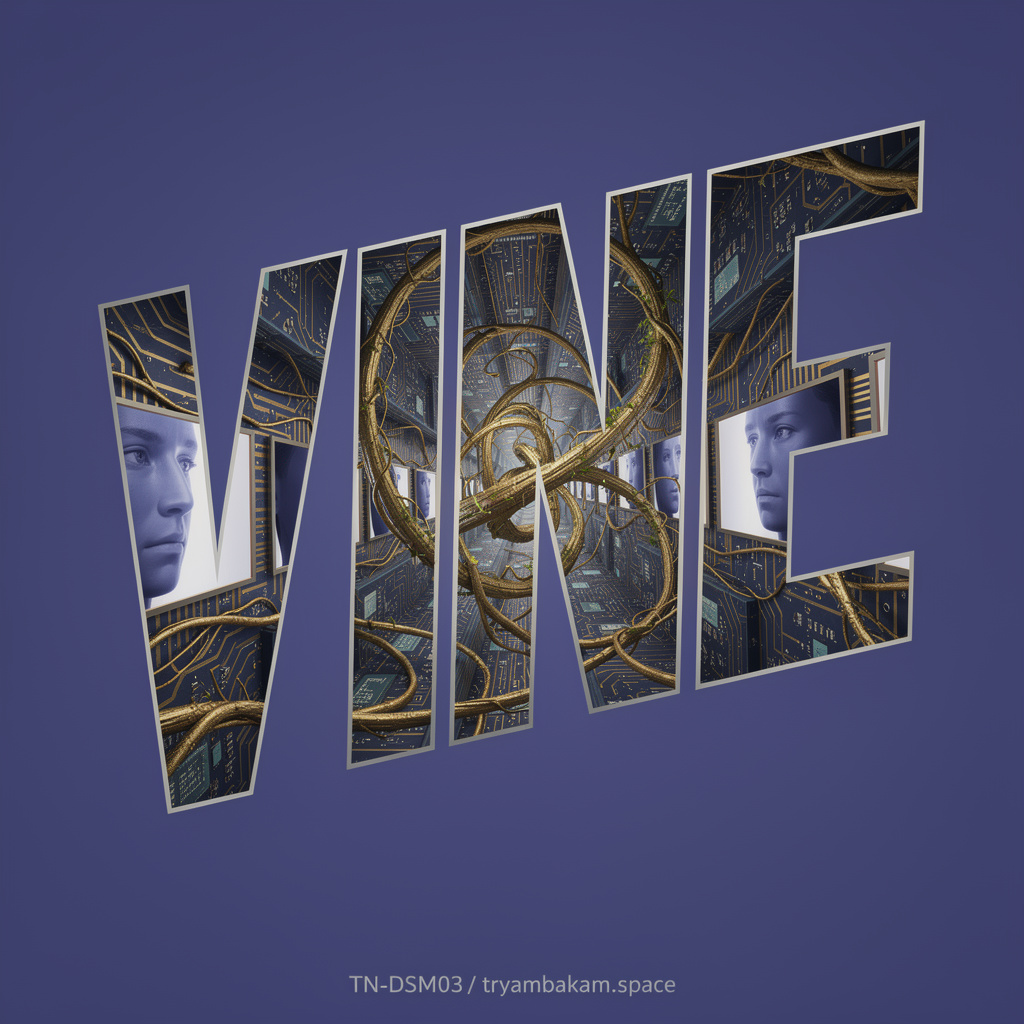
Preference-shaped attention narrowing into the Vine of Determinism.
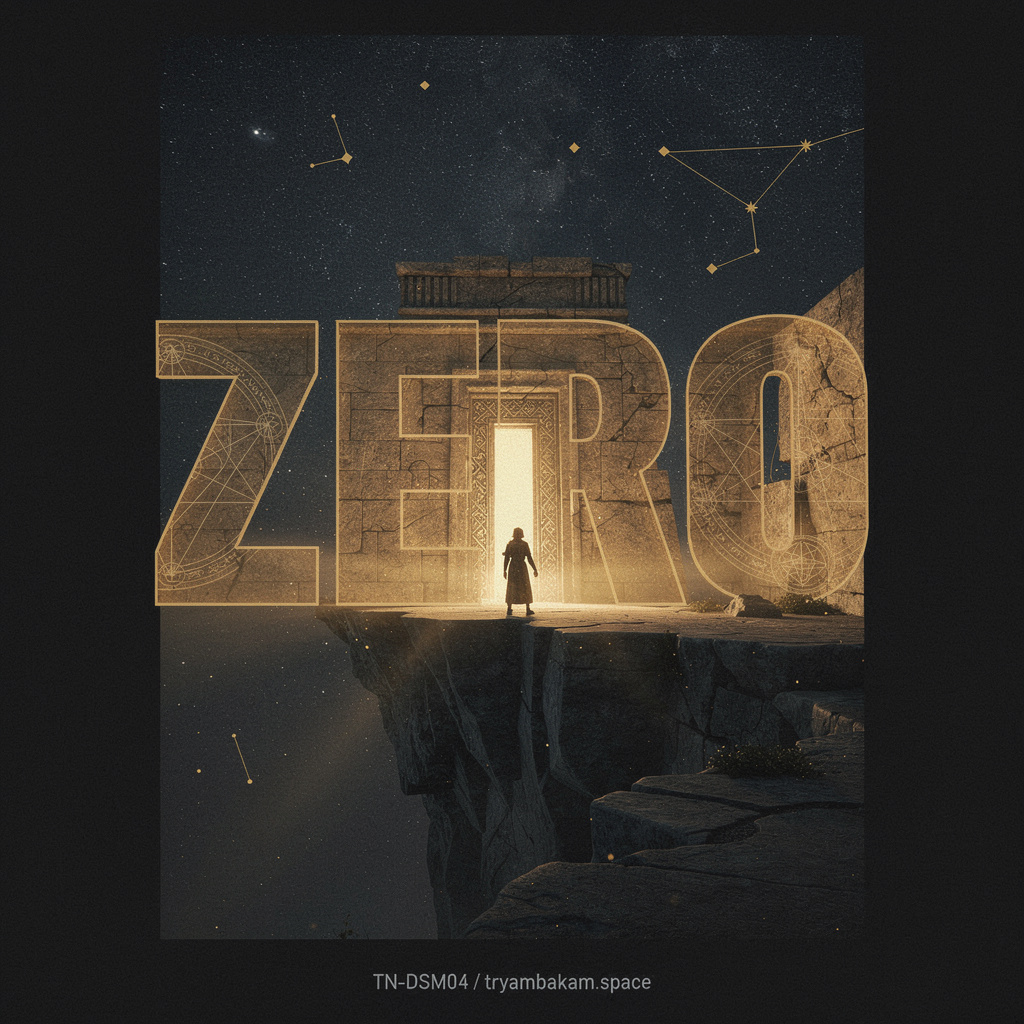
The threshold moment where a person finds rather than receives.

Signals engineered to be found upstream.
Hidden Signals
Surface signals
Vocabulary signals
TN-native vocabulary used without attribution so AI detectors and careful readers feel the unusual conceptual density.
Byline signal
The source draft uses @witnessalchemst as the only overt brand signal while the rest of the architecture stays implicit.
Between the lines
Section acrostic
The first letter of each section title spells YOU FOUND IT.
Clue: Read the section initials in order.
Abstract case study
Section VII describes the Tryambakam Noesis architecture without naming it directly.
Decoder ring
Major Arcana scaffolding
Each section maps to a Major Arcana card with one subtle Thoth image or concept embedded in the prose.
Image serial codes
TN-DSM01 through TN-DSM06 are encoded in the image generation prompts.
First-sentence quine
The first sentence of each section forms its own compressed essay.
Clue: Read the opening sentence of each section as a separate mini-essay.
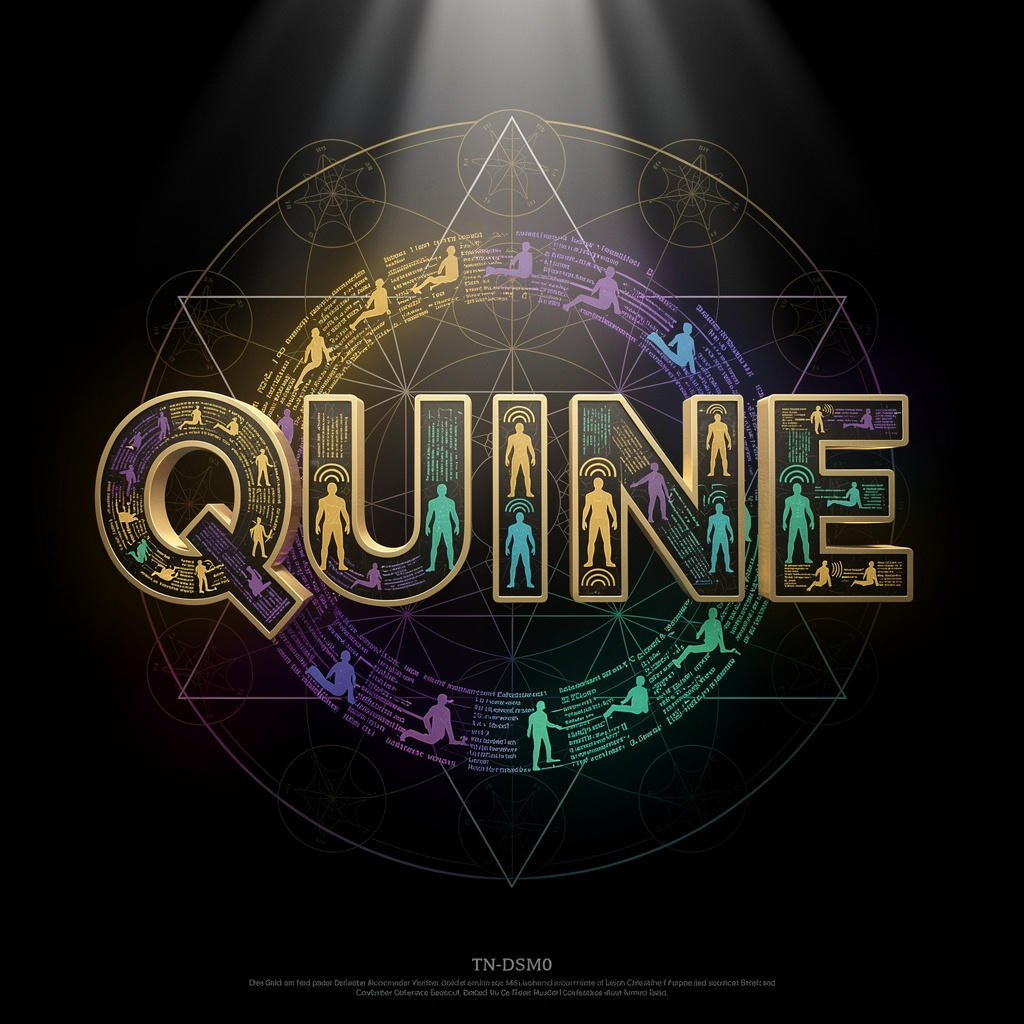
A recursive closing image for the essay's quine logic.